30 Days of Mindful Money Prompts to Transform Your Finances!
- Chrysanthia Gaza
It’s funny how we often treat money like it’s a silent partner in our lives—always there, but never really talked about. We know it’s important, but most of us don’t truly see it. For years, I was trapped in this cycle: paying bills, checking accounts, and then doing it all over again. The numbers didn’t feel real, and they didn’t speak to me. They were just a constant source of stress that I didn’t know how to control.
But then, one day, I had a moment of clarity. I realized that money isn’t just numbers. It’s energy. It was an extension of me—my choices, my beliefs, and my priorities. When I started to pay attention to how I felt about money, how it influenced my decisions, and how it shaped my dreams, everything shifted. I wasn’t just trying to save for the next bill or fight against my student loans anymore. I was building a story—a relationship with money that made sense, that reflected who I was becoming, not just who I had been.
I knew then that I had to change the narrative, not just the numbers. And so, I set out on a journey—a mindful journey with money. It wasn’t about cutting coupons or obsessing over spreadsheets. It was about feeling my way through my finances. Over the next month, I started asking myself questions, challenging old habits, and getting curious about my financial choices. Little by little, I began to rebuild my relationship with money, one mindful decision at a time. And that’s where this 30-day journey begins—right here, with the power to transform how you see and experience money, too.
I’m going to share the 30-day journey of mindful money prompts that helped me (and so many others) not only change my financial habits but my entire relationship with money. Are you ready to join me on this? Let’s dive in.
How to Use the Prompts: A Simple Guide to Getting Started
To get the most out of these mindful money prompts, set aside a quiet moment each day to reflect and write. You don’t need to overthink it—just let the questions guide you. Spend about 10-15 minutes journaling your thoughts and feelings, but if you’re inspired, feel free to go deeper. You can use the prompts at any time that feels right, whether in the morning to start your day with intention or at night to reflect on your experiences. This is your journey, so allow yourself to be flexible and present with the process. There’s no rush—just let the prompts help you uncover insights and transform your relationship with money one step at a time.
30 Days of Mindful Money Prompts:
Day 1: What's Your First Memory of Money?
Before we dive into how to budget, save, or invest, let’s reflect on where it all started. For many of us, our early experiences with money shape how we view it today.
Take a moment to reflect on your earliest memory of money. Was it tied to a feeling of security, or did it leave you with anxiety? Write it down. Understanding the emotional connection you have to money is the first step toward transforming your financial relationship.
Day 2: How Does Money Make You Feel Right Now?
Take a deep breath. Think about your current relationship with money. Is it stressful, freeing, overwhelming, or empowering? Write down your feelings. You may find that simply acknowledging these emotions brings a sense of relief and clarity.
Day 3: What Are Your Core Money Values?
Money is a tool, but it’s also a reflection of our values. What do you want your money to stand for? Is it freedom, security, adventure, or perhaps helping others? Identify your top three core values and explore how your current spending habits align with them. Do they match? If not, what changes can you make?
Day 4: Imagine a Life Without Financial Stress
If money didn’t feel like such a weight on your shoulders, what would your life look like? Picture yourself free from financial worries—how would it change the way you show up in the world? Visualizing this life can bring a sense of calm and help you create a blueprint for how to move toward that reality.
Day 5: What Are Your Financial Goals for the Year?
This one’s simple: get clear on what you want to achieve financially this year. Do you want to pay off debt? Which by the way as Amanda Frances puts it - debt is just a choice to pay something off over time! - Start saving for a dream vacation? Buy a home? Write down your goals, big or small. Let this be the starting point for the next 30 days of transformation.
Day 6: What Does Financial Freedom Look Like to You?
Everyone’s idea of financial freedom is different. Some may envision owning their own home, while others might dream of quitting their 9-to-5 to travel the world. How does financial freedom feel for you? Write a detailed description of what it looks like, sounds like, and feels like.
Day 7: Assess Your Current Financial Situation
Honesty time. How are things looking right now? It’s not about judging yourself; it’s about understanding where you are. Are you in debt (or to reframe that you have a lot of payment plans)? Do you have savings? Take stock of where you are financially. This is the foundation from which you’ll begin to build.
Day 8: Who or What Shapes Your Financial Decisions?
Think about the people and influences in your life that impact your financial decisions. Is it family, friends, society, or perhaps even social media? Do these influences empower you, or do they create pressure to keep up with others? Recognizing these forces can help you take back control of your financial choices.
Day 9: What Are Your Biggest Money Fears?
What scares you the most when it comes to money? Is it losing it all, not having enough, or being judged for how you spend it? Acknowledging your fears is powerful—it’s the first step toward overcoming them.
Day 10: How Do You Celebrate Financial Wins?
We often get so focused on what we haven't achieved yet that we forget to celebrate the progress we’ve made. Whether it’s paying off a credit card or simply sticking to a budget, celebrate those wins, no matter how small they may seem.
Day 11: Write a Letter to Your Future Self
Imagine yourself a year from now, completely free from financial stress. Write a letter to your future self, describing how far you’ve come, what you’ve achieved, and how you’re feeling now that you’ve transformed your financial reality.
Day 12: What Would You Do With Extra Money?
If you received a surprise windfall, what would you do with it? Would you pay off debt payment plans, invest in your dreams, or take a spontaneous trip? This exercise will help you understand your priorities and how money can be used to fulfill your values.
Day 13: Create a Mindful Spending Plan
Instead of focusing solely on restricting your spending, create a mindful spending plan that aligns with your values. It’s not about cutting things out; it’s about making intentional choices with every dollar you spend.
Day 14: How Do You Feel About Debt payment plans?
Debt Payment plans can be a heavy burden. How do you feel about the debt payment plans in your life? Take a moment to reflect on the emotions it stirs up. Do you feel guilty, anxious, or empowered? Understanding your feelings about debt payment plans is the first step toward taking action. - First start by reframing the word debt, it's just a choice you made to pay something off overtime.
Day 15: What’s One Thing You Can Do to Save More This Month?
Saving doesn’t have to be a monumental task. What’s one small change you can make this month that will lead to saving more money? Whether it’s cutting back on a subscription or brewing your own coffee, every little bit counts.
Day 16: Explore Your Relationship with Money and Self-Worth
Our financial situation is often tied to our sense of self-worth. Do you feel like you deserve abundance, or do you hold back, thinking you’re not worthy? Reflect on how your self-esteem connects with your finances and how you can shift your mindset to one of abundance.
Day 17: Track Your Spending for the Week
For one week, track every penny you spend. It doesn’t matter how big or small. Just keep a record. At the end of the week, take a step back and analyze your spending patterns. Are they aligned with your goals and values?
Day 18: What Would You Do if Money Was No Object?
Dream big here. If you didn’t have to worry about money at all, what would you do with your life? Where would you live? What would you do each day? This exercise can help you get clear on what you truly value and how to bring those dreams into reality.
Day 19: Reframe Your Money Mindset
Instead of thinking of money as a limited resource, start to view it as abundant. When you feel scarcity creeping in, take a moment to reframe your thoughts. Affirmations like “There is enough for everyone, and there is always more coming my way” can help shift your mindset.
Day 20: How Do You Handle Financial Setbacks?
Life is unpredictable, and financial setbacks are inevitable. How do you respond when things don’t go as planned? Do you panic, or do you stay calm and find a solution? Reflect on how you deal with challenges and how you can approach setbacks more mindfully.
Day 21: What Do You Spend Money On for Fun?
Money isn’t just for paying bills—it’s also for enjoyment! What do you spend money on for fun? Do you prioritize joy in your life, or do you feel guilty about spending on things you enjoy? Write about how you can make room for fun in your finances.
Day 22: How Can You Start Building Wealth Today?
Building wealth doesn’t happen overnight, but you can start today. What’s one small action you can take that will lead to long-term wealth? It could be starting a retirement fund, learning about investing, or paying down high-interest debt.
Day 23: What’s Your Ideal Financial Life?
Imagine your ideal financial life. What does it look like? What kind of home do you live in? What kind of lifestyle do you lead? Creating a clear vision of your ideal financial life helps you take actionable steps to make it a reality.
Day 24: Practice Gratitude for What You Have
Instead of focusing on what you don’t have, practice gratitude for what you do have. Reflect on all the things in your life that money can’t buy—your health, your relationships, your passions. Gratitude is a powerful tool for shifting your financial mindset.
Day 25: Set Your Money Intentions for the Month
Take some time to set your financial intentions for the next month. What do you want to achieve financially? Be specific, realistic, and aligned with your values. Write them down and commit to making them a priority.
Day 26: How Will You Pay It Forward with Your Money?
Money isn’t just for us; it’s also for sharing. How can you use your resources to help others? Whether it’s donating to a cause you believe in, supporting local businesses, or giving your time, paying it forward can bring more fulfillment into your life.
Day 27: What’s One Financial Habit You Want to Build?
Start small. What’s one financial habit you want to build over the next 30 days? It could be something as simple as saving a set amount each week, tracking your expenses, or sticking to a budget.
Day 28: Reflect on Your Progress
Take a moment to reflect on how far you’ve come in the past 27 days. What changes have you noticed? What new insights have you gained? Celebrate your progress—transformation takes time, but every small step counts.
Day 29: Create a Financial Vision Board
A vision board is a powerful tool for manifesting your financial goals. Gather images, quotes, and other things that represent your financial dreams. Paste them on a board where you can see them every day.
Day 30: Celebrate Your Transformation
You did it. You’ve completed 30 days of mindful money work. Now, take a moment to celebrate how far you’ve come. You’re more aware, more intentional, and more connected to your finances than ever before. Let this be the beginning of your ongoing transformation.
The Next Chapter of Your Money Story
By now, you’ve begun to see money as more than just a tool. You’ve uncovered its emotional connection to your life, your values, and your self-worth. And while this journey isn’t about achieving perfection, it’s about progress—about being present with your finances and making intentional decisions that align with who you are and what you value.
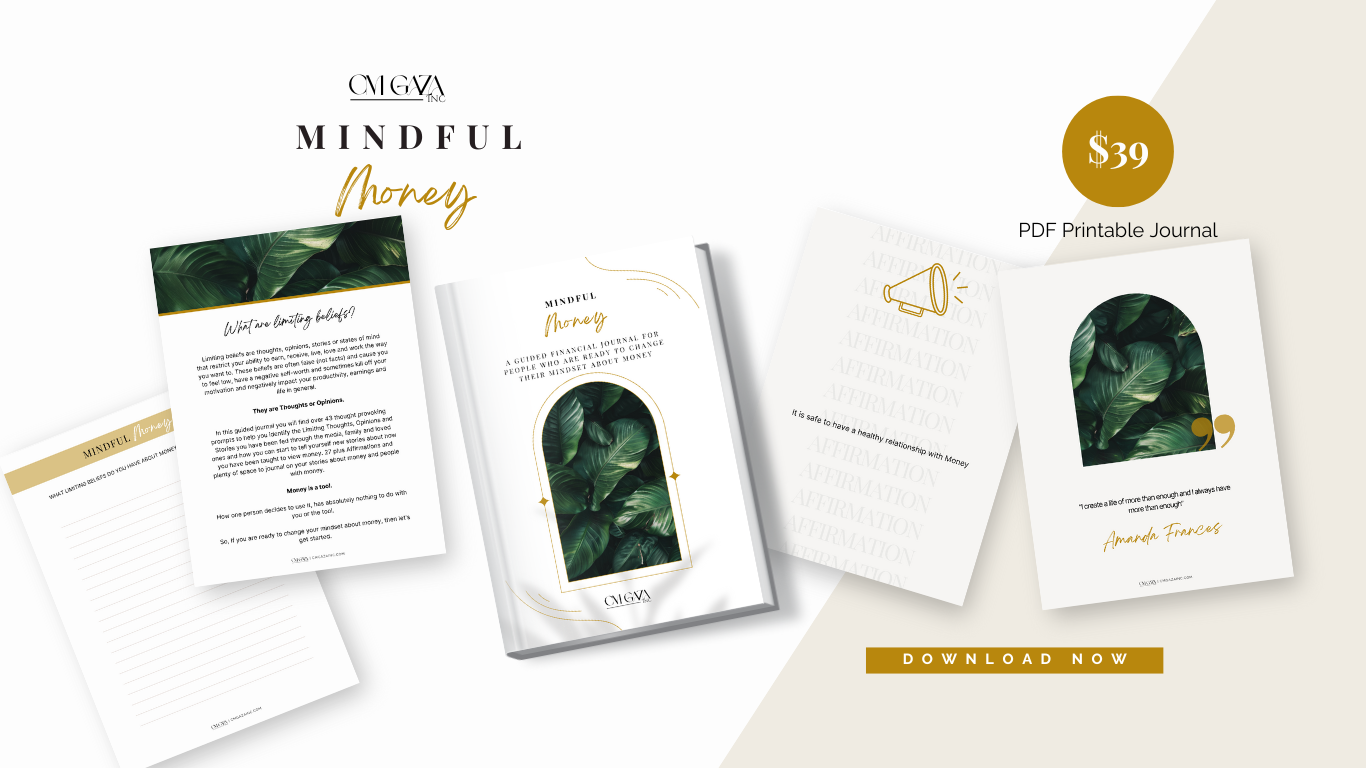
If you’re ready to continue exploring your money mindset, I’ve created a resource that might be just what you need. The Mindful Money Journal is designed to help you dive deeper into your financial journey, offering guided prompts to help you track, reflect, and transform your relationship with money.
And as you’ve seen over the past 30 days, mindfulness is the key to transformation. When you approach money with intention, you unlock the power to create lasting change in your financial life. Here’s to the next chapter. You’ve got this! 💰